
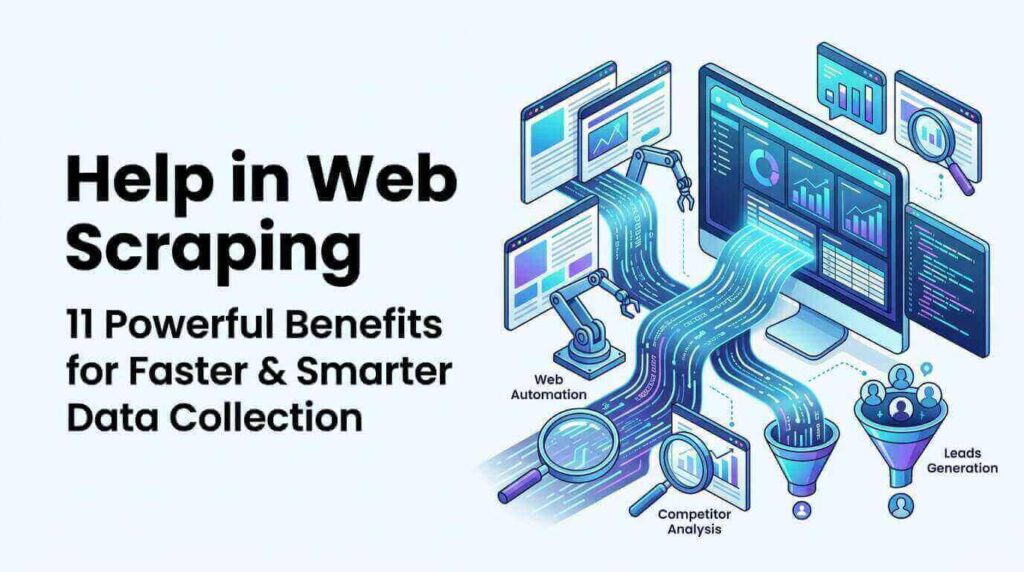
Help in web scraping has become increasingly important for businesses, researchers, marketers, and developers who need large amounts of online data. The internet contains billions of web pages filled with valuable information, but collecting that data manually can take countless hours. This is where help in web scraping makes a significant difference.
Web scraping is the process of automatically extracting information from websites and converting it into a structured format for analysis. Whether you need product prices, market trends, customer reviews, competitor insights, or research data, web scraping can save time and improve accuracy.
In this guide, you’ll learn everything about help in web scraping, its benefits, challenges, tools, best practices, and how it can support your business goals.
What Is Help in Web Scraping?
Help in web scraping refers to the assistance, tools, expertise, and services used to collect data from websites efficiently and accurately. Instead of copying information manually, web scraping tools automatically visit web pages, extract relevant information, and organize it into formats such as:
- CSV files
- Excel spreadsheets
- Databases
- JSON files
- APIs
This process helps organizations gather valuable information quickly while reducing human effort.
How Help in Web Scraping Works
The process usually follows these steps:
- Access a website.
- Read the webpage source code.
- Locate the required information.
- Extract the data.
- Clean and structure the information.
- Export the results for analysis.
Professional help in web scraping ensures that the extracted data is accurate, organized, and useful.
Why Businesses Need Help in Web Scraping
Businesses generate better decisions when they have access to reliable data. Help in web scraping provides the information needed to understand markets, customers, and competitors. Some common reasons businesses seek help in web scraping include:
- Competitor monitoring
- Price tracking
- Lead generation
- Market research
- Product analysis
- Customer sentiment analysis
- Trend forecasting
Without proper data collection methods, businesses may miss valuable opportunities.
11 Powerful Benefits of Help in Web Scraping
1. Faster Data Collection
Manual data collection often requires hours or even weeks of work, especially when dealing with large websites or multiple sources. Help in web scraping automates the entire process, allowing businesses to collect thousands of records within minutes. This speed helps organizations access up-to-date information and make decisions much faster than traditional methods.
2. Improved Accuracy
When data is collected manually, mistakes such as typing errors, missing information, and duplicate entries are common. Help in web scraping minimizes these issues by using automated tools that consistently extract information according to predefined rules. This results in cleaner, more accurate datasets that can be trusted for analysis and reporting.
3. Cost Savings
Hiring staff to perform repetitive data collection tasks can significantly increase operational expenses. Help in web scraping reduces these costs by automating the process and requiring less manual effort. Businesses can allocate their resources more effectively while still obtaining large amounts of valuable information on a regular basis.
4. Better Market Research
Understanding customers and industry trends is essential for business growth. Help in web scraping allows organizations to gather information about consumer behavior, product demand, competitor activities, and emerging market trends. Access to this data enables companies to make informed decisions and develop strategies based on real market insights.
5. Competitor Intelligence
Keeping track of competitors is important in any industry. Help in web scraping enables businesses to monitor competitor pricing, product launches, promotions, customer feedback, and marketing strategies. By collecting and analyzing this information, companies can identify opportunities, improve their offerings, and maintain a stronger position in the market.
6. Lead Generation
Finding potential customers can be a time-consuming process when done manually. Help in web scraping simplifies lead generation by collecting publicly available contact details and business information from relevant sources. Sales and marketing teams can then use this data to build targeted prospect lists and improve outreach efforts more efficiently.
7. Real-Time Monitoring
Many industries rely on timely information to remain competitive. Help in web scraping allows businesses to continuously monitor websites for updates, changes, and new content. Real-time monitoring helps organizations respond quickly to pricing changes, market shifts, product updates, and other important developments that may impact their operations.
8. Enhanced Data Analysis
Large volumes of data often reveal patterns that would otherwise go unnoticed. Help in web scraping provides businesses with extensive datasets that can be analyzed to identify trends, opportunities, and customer preferences. These insights support smarter planning, better forecasting, and more effective business strategies over time.
9. Increased Productivity
Employees often spend valuable time gathering information instead of focusing on higher-value tasks. Help in web scraping automates data collection, allowing teams to dedicate more time to analysis, strategy development, and decision-making. This increased efficiency improves productivity and helps organizations achieve better results with fewer resources.
10. Better Pricing Strategies
Pricing plays a major role in attracting customers and maintaining profitability. Help in web scraping enables businesses to monitor competitor prices, discounts, and promotional offers across multiple platforms. With access to real-time pricing data, companies can make informed pricing decisions that improve competitiveness and maximize revenue opportunities.
11. Scalable Data Collection
As businesses expand, their need for information grows as well. Help in web scraping provides a scalable solution that can handle increasing amounts of data without requiring significant additional resources. Whether collecting hundreds or millions of records, automated scraping systems can adapt to changing business needs efficiently and cost-effectively.
Common Use Cases of Help in Web Scraping
Many industries benefit from web scraping.
Ecommerce Industry
Online retailers use help in web scraping for:
- Product monitoring
- Price comparison
- Inventory tracking
- Competitor analysis
Financial Industry
Financial organizations collect market information from multiple sources. Common applications include:
- Stock analysis
- Market research
- Investment monitoring
- Risk assessment
Real Estate Industry
Real estate companies gather property information such as:
- Listings
- Prices
- Rental trends
- Location data
Travel Industry
Travel companies use web scraping to monitor:
- Hotel rates
- Flight prices
- Travel reviews
- Tourism trends
Academic Research
Researchers collect large datasets for studies and reports. Web scraping helps automate this process and improve efficiency.
Essential Tools That Provide Help in Web Scraping
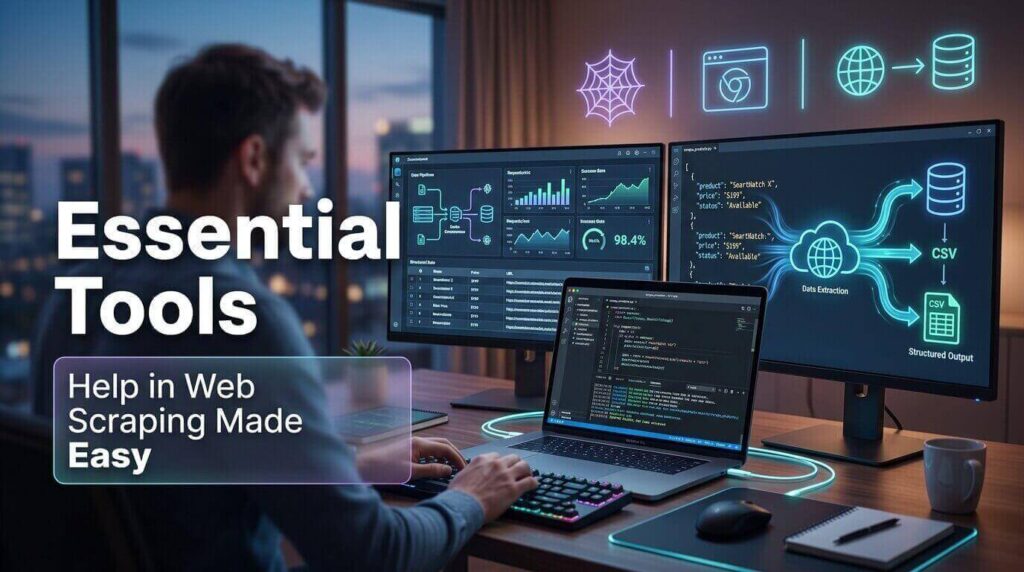
Several tools are available for extracting website data.
Python and Help in Web Scraping
Python is one of the most popular programming languages for web scraping. Popular Python libraries include:
- BeautifulSoup
- Scrapy
- Selenium
These tools help developers extract and process website information efficiently.
Scrapy Framework
Scrapy is a powerful framework designed specifically for large-scale web scraping projects. Benefits include:
- High speed
- Scalability
- Data export options
- Strong community support
Selenium
Some websites use JavaScript to load content dynamically. Selenium can interact with web browsers and collect data from dynamic websites.
Understanding Data Extraction in Web Scraping
Data extraction involves identifying specific information from a webpage and transferring it into a usable format. Examples include:
- Product names
- Prices
- Contact information
- Customer reviews
- Ratings
Effective data extraction is essential for successful web scraping projects.
Website Data Collection Techniques
Another important LSI keyword is website data collection. Website data collection can be performed using different approaches:
- Static Page Collection:Information is extracted directly from the page source code.
- Dynamic Page Collection:Content generated through JavaScript is captured using browser automation tools.
- API-Based Collection:Some websites provide APIs that allow structured access to information. This method is often faster and more reliable.
The Role of Web Automation in Scraping
Web automation enables software to perform repetitive tasks automatically.Examples include:
- Clicking buttons
- Filling forms
- Navigating pages
- Logging into websites
- Downloading information
Combining web automation with scraping creates highly efficient data collection systems.
Challenges in Help in Web Scraping
While web scraping offers many advantages, several challenges exist.
Anti-Scraping Measures
Many websites implement protections against automated data extraction.These may include:
- CAPTCHAs
- Rate limits
- IP blocking
- Login requirements
Professional help in web scraping often includes methods to overcome these obstacles legally and ethically.
Changing Website Structures
Websites frequently update their layouts.When this happens, scraping scripts may stop working and require maintenance.
Large Data Volumes
Managing millions of records can become difficult without proper infrastructure.Organizations often need scalable storage solutions.
What Is DOM Parsing?
A useful technical term often associated with web scraping is DOM Parsing.DOM Parsing refers to analyzing the Document Object Model (DOM) structure of a webpage to identify and extract specific elements.This term is commonly used by developers working on advanced scraping projects and can be linked to an external definition resource.
Best Practices for Help in Web Scraping
Following best practices improves success rates and data quality.
- Respect Website Policies: Always review a website’s terms and conditions before collecting data.
- Avoid Excessive Requests: Sending too many requests can overload servers. Use reasonable request intervals.
- Clean Extracted Data: Raw data often contains duplicates and inconsistencies. Data cleaning improves quality and usability.
- Store Information Securely: Protect collected information using secure databases and proper access controls.
How to Choose Professional Help in Web Scraping
Selecting the right provider is important. Consider the following factors:
- Experience level
- Technical expertise
- Data accuracy
- Scalability
- Customer support
- Security standards
A reliable service provider can save time and deliver high-quality results.
Future Trends in Help in Web Scraping
The future of web scraping continues to evolve. Several trends are shaping the industry:
- AI-Powered Extraction: Artificial intelligence is improving data extraction accuracy and automation.
- Cloud-Based Scraping: Cloud platforms provide scalable infrastructure for large projects.
- Real-Time Data Collection: Businesses increasingly require instant access to updated information.
- Advanced Automation: Automation technologies continue to simplify complex scraping workflows.
Conclusion
Help in web scraping has become an essential solution for organizations that depend on accurate and timely information. From competitor monitoring and market research to lead generation and pricing intelligence, web scraping enables businesses to collect valuable data efficiently.
With modern tools, automation technologies, and professional expertise, help in web scraping can dramatically reduce manual effort while increasing productivity and decision-making accuracy. As data continues to drive business success, the demand for reliable web scraping solutions will only continue to grow.
Whether you are a startup, researcher, marketer, or enterprise organization, investing in help in web scraping can provide a strong competitive advantage and unlock valuable insights hidden across the web.
Python Programming Urgent Help: Best Powerful Solutions 2026
Frequently Asked Questions (FAQs)
What is web scraping and why is it useful?
Web scraping is the process of automatically extracting data from websites and converting it into a structured format. It is useful because it helps businesses, researchers, and marketers collect large amounts of information quickly and accurately without manual effort.
Is web scraping legal?
Web scraping is generally legal when collecting publicly available data and complying with a website’s terms of service. However, laws and regulations vary by country, so it is important to use web scraping responsibly and ethically.
What tools are commonly used for help in web scraping?
Some of the most popular web scraping tools include Python libraries such as BeautifulSoup, Scrapy, and Selenium. These tools help automate data extraction, website navigation, and data processing tasks.
How can professional help in web scraping benefit my business?
Professional help in web scraping can save time, improve data accuracy, automate repetitive tasks, monitor competitors, track market trends, and provide valuable insights that support better business decisions and growth.